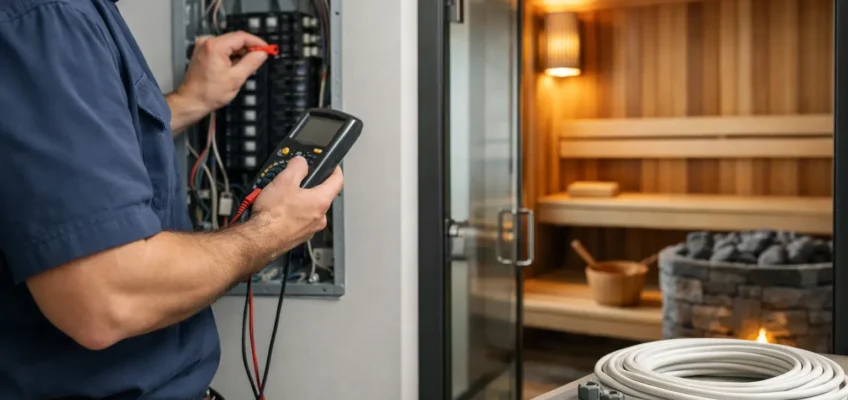
Home Sauna Electrical Requirements Explained
A premium home sauna can turn an unused corner, primary bath, or backyard retreat into a genuinely restorative space. But home sauna electrical requirements deserve attention before you choose wood finishes, heater size, or accessories. The electrical plan determines which sauna models will work in your home, what installation may cost, and whether the finished space will perform safely for years.
For most shoppers, the right approach is straightforward: choose the sauna style and size first, verify the manufacturer’s electrical specifications, then have a licensed electrician assess your panel capacity and local code requirements. A sauna is not the place to make assumptions based on a standard wall outlet.
Why Sauna Electrical Planning Comes First
Traditional electric saunas create heat with a high-output heater, while infrared saunas use multiple radiant panels. That difference affects nearly every electrical decision. An infrared unit may plug into a standard 120-volt outlet, depending on its size and design. A traditional sauna commonly requires a 240-volt circuit and substantially more available power.
The sauna’s nameplate rating is the number that matters most. It states the voltage, wattage or amperage, phase, and wiring requirements for that specific model. Two similarly sized cabins can have very different needs because of insulation, heater technology, intended temperature range, and added features such as lighting, audio, or Wi-Fi controls.
This is also a value issue, not just a technical one. A lower-priced sauna can become the more expensive choice if it requires a major panel upgrade or a long, difficult wire run. Conversely, a higher-quality model with a clear installation manual and appropriate electrical demand may be a better fit for your home and budget.
The Typical Home Sauna Electrical Requirements
Most residential sauna installations fall into one of two categories: 120-volt plug-in units and 240-volt hardwired units. There are exceptions, so always treat these as planning ranges rather than a substitute for the product manual.
120-Volt Plug-In Infrared Saunas
Compact infrared saunas are often designed for a standard 120-volt, 15- or 20-amp receptacle. A dedicated 20-amp circuit is frequently the smarter choice, even if the manufacturer permits a shared circuit. Saunas draw power for extended periods, and sharing that circuit with bathroom appliances, lights, refrigerators, or exercise equipment can lead to nuisance tripping and inconsistent operation.
A plug-in sauna may be appealing because it can reduce installation complexity. Still, “plug-in” does not mean “plug it anywhere.” The outlet must be correctly grounded, properly located, and protected as required by local code. Extension cords and power strips are not appropriate for a sauna heater or infrared cabin.
240-Volt Traditional Electric Saunas
Most indoor and outdoor traditional saunas use a 240-volt electric heater. These heaters commonly need a dedicated double-pole breaker and hardwired connection. Smaller heaters may require roughly 20 to 30 amps, while larger family-size cabins can require 40, 50, or more amps.
The heater’s kilowatt rating provides a useful early signal. A 4.5 kW heater will generally demand less electrical capacity than a 9 kW heater, but wire size, breaker size, disconnect requirements, and load calculations must follow the manufacturer’s instructions and applicable code. Do not select a breaker by guessing from the cabin dimensions alone.
Traditional sauna heaters are typically controlled by a wall-mounted or integrated control system. Depending on the model, the electrician may need to run wiring for the heater, control panel, temperature sensor, and lighting. Confirm whether those components are included with the sauna package and whether the control location has specific clearance requirements.
Dedicated Circuits Are the Standard to Expect
A dedicated circuit serves one appliance or fixed load. For a home sauna, it protects performance and helps reduce overload risk. The circuit should not also supply a freezer, bathroom receptacles, a treadmill, or your home theater system.
For a hardwired 240-volt sauna, a dedicated circuit is almost always part of the installation. For a 120-volt infrared sauna, it is still strongly worth considering. Your electrician will assess the sauna’s continuous load characteristics, the circuit rating, and the manufacturer’s directions to determine the appropriate setup.
It is tempting to focus only on whether an open breaker slot exists in the panel. Available physical space is not the same as available electrical capacity. A full load calculation considers the service size, existing heating and cooling equipment, electric vehicle charging, kitchen appliances, laundry equipment, and other major demands on the home.
Will Your Electrical Panel Support a Sauna?
Many newer homes with 200-amp service can accommodate a residential sauna, particularly a modest infrared model or mid-size traditional cabin. But there is no universal answer. A 100-amp panel in a home with electric heat, an electric range, and a growing list of high-demand appliances may have little usable capacity left.
An electrician can determine whether your current panel can support the new load, whether a subpanel is practical, or whether a service upgrade should be considered. A subpanel can be useful when the sauna is located far from the main panel, such as in a detached garage, pool house, or backyard structure. It does not create additional service capacity on its own, but it can simplify distribution and future expansion.
Distance matters because longer wire runs can increase labor and material costs. Routing wiring through finished walls, under hardscape, or to a detached building adds complexity. Bring the sauna location into the conversation early, especially during a basement remodel or new construction, when running conduit is often easier and less disruptive.
Indoor, Outdoor, and Wet-Area Considerations
Location changes the installation requirements. A sauna installed in a dry basement room has different considerations than one placed beside a shower, on a covered patio, or in a freestanding backyard cabin.
Outdoor installations need wiring methods and equipment rated for exterior exposure. Underground runs may require conduit, burial-depth compliance, and weatherproof connections. A local disconnect may also be required or recommended based on the equipment and installation layout. The sauna itself must be rated for outdoor use; a standard indoor infrared cabin should not be moved onto a patio simply because it fits the space.
Bathrooms and spa-like wet areas require particular care. Electrical receptacles, switches, lighting, and sauna controls must meet clearance and protection rules. Ground-fault circuit-interrupter protection may be required in certain locations or for certain equipment. These details vary by local adoption of the National Electrical Code and by the manufacturer’s instructions, which is why a qualified installer should make the final call.
Permits, Inspections, and Manufacturer Instructions
A permitted installation can feel like one more line item, but it is valuable protection for a significant home investment. Permits and inspections help verify that wire sizing, overcurrent protection, grounding, disconnects, and equipment placement are handled correctly. They can also matter to insurers, future buyers, and anyone reviewing work completed during a renovation.
Your local authority having jurisdiction sets the enforceable rules. Some areas require a permit for a new dedicated circuit; others may have additional rules for outdoor structures or bathroom remodels. A licensed electrician can usually handle the permit process, but homeowners should confirm who is responsible before work begins.
The sauna manufacturer’s installation guide is equally important. Electrical instructions are part of the product’s safety listing and warranty conditions. If a heater specifies copper conductors, a particular breaker rating, or a certain control cable, those details are not optional upgrades. They are part of installing the product as designed.
Questions to Answer Before You Buy
Before committing to a model, ask the seller or manufacturer for the exact electrical specification sheet, not just a general product description. Then share it with your electrician. The most useful details include the required voltage, maximum amperage, breaker size, hardwired versus plug-in connection, and whether the heater, lights, controls, and accessories have separate requirements.
You should also confirm whether the advertised sauna package includes the heater and control system. Some premium traditional sauna cabins are sold with several heater options, each carrying a different electrical load. Selecting the larger heater for faster recovery or a higher-capacity cabin may change the installation plan.
Finally, plan for the full wellness space. If you expect to add a cold plunge with a chiller, heated flooring, a towel warmer, or adjacent fitness equipment, mention those plans during the load calculation. Coordinating the electrical work once is often more cost-effective than reopening walls later.
A well-chosen sauna should feel like a retreat, not a source of installation surprises. Give the electrical plan the same care you give comfort, craftsmanship, and heater performance, and you will be in a far better position to shop with confidence.
