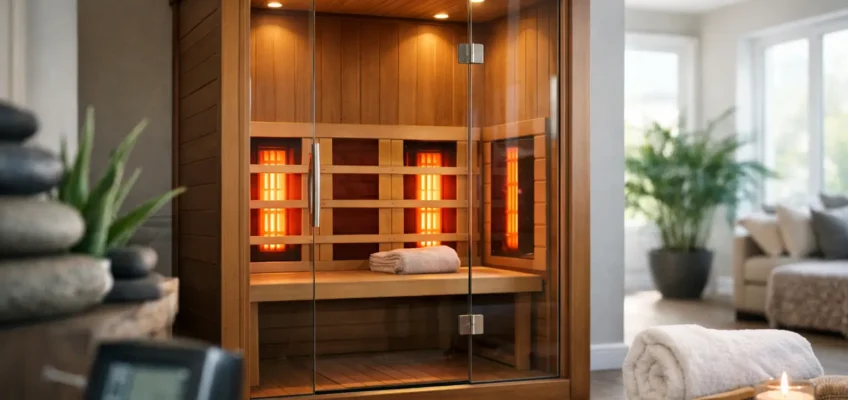
Low EMF Infrared Sauna Buying Guide for Homes
A home sauna should feel like a place to reset, not another technical purchase you second-guess after delivery. For shoppers considering a low emf infrared sauna, the challenge is separating useful design details from vague marketing claims. EMF performance matters, but it is only one part of a satisfying, durable, and comfortable home wellness investment.
The best choice balances transparent testing with the factors you will notice every session: heat quality, cabin size, materials, controls, electrical requirements, and the reputation of the manufacturer. A lower reading is worth considering, but it does not automatically make one sauna better for your home than every alternative.
What “Low EMF” Means in an Infrared Sauna
EMF stands for electromagnetic fields, which are produced by electrical wiring and electronic components. Infrared saunas use powered heaters, so some level of EMF is expected. A low EMF model is designed and tested to keep measured fields lower in the seating area, usually through heater placement, shielding, wiring design, and component selection.
The term itself is not a regulated performance category. That means two brands can both use “low EMF” language while reporting different measurements, using different units, or testing from different locations inside the cabin. For an informed comparison, ask how the reading was measured, where the meter was placed, and whether the number reflects an empty cabin or a real seated position.
Many sauna brands report magnetic fields in milligauss (mG). Some may provide electric-field readings in volts per meter (V/m), while others mention extremely low frequency, or ELF, measurements. Those figures are not interchangeable. A single impressive number without test conditions tells you far less than a clear report that identifies the meter, distance from the heater, operating settings, and measurement points.
Health claims deserve the same level of care. People buy infrared saunas for relaxation, warmth, recovery routines, and the convenience of a private wellness space. Research and medical guidance around EMF exposure can be complex, and a low EMF designation should not be treated as a medical promise or a substitute for professional health advice.
How to Compare a Low EMF Infrared Sauna
Start with measurement transparency rather than the lowest number printed on a product page. A quality manufacturer should be able to explain its test process in practical terms. Look for readings taken at the bench and backrest, not only at the center of an empty cabin or an unusually favorable distance from the heaters.
It also helps to know whether the published result is a peak, an average, or a range. A sauna with consistently low readings in the areas where your torso, legs, and back sit may be more meaningful than a model with one low result reported from a single location.
Heater design affects both EMF considerations and the experience of using the sauna. Carbon panel heaters generally distribute warmth across a larger surface area and can create a gentler, more even cabin feel. Ceramic heaters often produce more concentrated heat and may appeal to users who want a more intense sensation. Neither heater type is automatically the right choice for every household. The better fit depends on how you prefer heat to feel, the layout of the cabin, and the brand’s engineering.
“Full spectrum” is another term that requires context. These saunas typically combine far, mid, and near infrared heater elements. Some shoppers prefer the flexibility of this setup, while others are entirely happy with a far-infrared design. Do not assume full spectrum is inherently superior. Consider whether the system offers comfortable, adjustable heat at the temperatures you will realistically use.
Cabin construction deserves equal attention. Solid wood interiors are popular because they create a refined finish and can support a premium at-home experience. Hemlock is often valued for its clean appearance and dependable performance, while cedar brings a more distinctive aroma and visual character. If anyone in your household is sensitive to fragrance, cedar may not be the first choice. Ask about adhesives, finishes, and interior material specifications rather than relying on a species name alone.
Comfort Often Determines Long-Term Value
A sauna that looks impressive online can become an expensive underused room if it feels cramped, takes too long to warm up, or has awkward seating. Before buying, compare interior dimensions, not just the advertised number of occupants. A two-person sauna may technically seat two adults, but it may not comfortably accommodate two people who want room to stretch or enter without squeezing past each other.
For a single regular user, a larger one- or two-person cabin can be an outstanding value because it provides personal space without requiring the footprint of a family-size unit. For couples and families, prioritize bench depth, door swing, headroom, and the position of the control panel. These details affect everyday comfort more than a decorative exterior upgrade.
Think about how you will use the sauna. If it will be part of an evening wind-down routine, interior lighting, easy controls, and a quiet operating experience may matter most. If you expect to use it after a home-gym workout, warm-up speed, durable surfaces, and convenient placement near a shower may carry more weight.
Features such as Bluetooth speakers, chromotherapy lighting, and app controls can be enjoyable, but they should not distract from core build quality. A well-made cabin with consistent heat, comfortable seating, and straightforward controls generally delivers more lasting satisfaction than a feature-heavy model with limited service support.
Installation Questions to Answer Before Ordering
Premium home saunas are easier to shop for when you treat installation as part of the product, not an afterthought. Measure the planned location carefully, including ceiling clearance and the route through doorways, stairwells, or elevators. Modular indoor cabins are often designed for assembly in a finished room, but the largest panel can still be difficult to maneuver through a tight hall.
Electrical needs vary widely. Compact models may operate on a standard 120-volt household outlet, while larger or higher-output units may require a dedicated 240-volt circuit and professional installation. Confirm the exact voltage, amperage, plug type, and circuit recommendation before choosing a location. A model that appears to fit your wellness room may require a meaningful electrical upgrade.
Ventilation and flooring should also be considered. Indoor infrared saunas usually do not need the extensive venting associated with some traditional steam or wood-fired sauna setups, but the room should still be clean, dry, and appropriate for electrical equipment. A level, durable floor is essential. Avoid placing a sauna where moisture, poor access, or extreme temperature swings could shorten its service life.
If you are planning a garage, basement, or covered outdoor area, check the manufacturer’s stated placement requirements. An indoor sauna is not automatically suitable for outdoor conditions, even if the space is protected from direct rain.
When Paying More Makes Sense
The price range for a low EMF infrared sauna can be substantial. Entry-level models may provide basic heat in a compact footprint, while premium cabins can add better woodwork, larger heater coverage, more refined controls, lower reported readings, and stronger warranty support.
Paying more is easier to justify when it solves a real need. That might mean a larger cabin for two adults, a 240-volt system with stronger performance, transparent multi-point EMF testing, or a manufacturer known for accessible customer service and replacement-part availability. These are practical advantages that can protect the value of a high-consideration purchase.
On the other hand, it may not be necessary to pay for a large multi-person cabin if only one person will use it. Nor is the lowest advertised EMF reading worth a premium if the brand cannot explain how it was obtained, the sauna has limited warranty coverage, or the installation does not suit your home.
Read shopper feedback with a specific goal. Look beyond star ratings for comments about assembly, heat-up time, door alignment, customer support, and use after several months. Community experiences can reveal whether a product performs as advertised once it becomes part of a real household routine.
Questions Worth Asking Before You Buy
Before committing, request clear answers to a few practical questions. Ask for the EMF measurement method and locations, then confirm the heater type, electrical requirements, assembled dimensions, warranty terms, and expected delivery process. If the sauna will be installed in a finished space, ask whether it can be assembled and serviced with the clearance you have available.
Also consider who will use it. People with medical conditions, pregnancy, implanted medical devices, heat sensitivity, or concerns about medication interactions should speak with a qualified clinician before starting a sauna routine. Even healthy users should hydrate, begin with shorter sessions, and leave the sauna if they feel dizzy, faint, or unwell.
The right sauna is not simply the one with the boldest low EMF claim. It is the model that gives you credible specifications, everyday comfort, dependable construction, and a setup that fits your home for years of restorative use.
